
Bruno Díaz


As an SEO agency, ALT text is one of those fields almost everyone fills in badly or ignores altogether, yet it delivers a huge return for the little effort it takes. The alt attribute describes an image for those who cannot see it: people using screen readers, browsers with images disabled and, above all, search engines. Google does not "see" an image the way a human does; it relies on ALT text as its main signal to understand what the image shows and in what context it is relevant. Done well, it improves accessibility, the ranking of your images and even the way AI and Google Lens interpret your site. In this guide we cover what it is, why it matters, how it should not be, how to write it well and how to optimize it at scale.
ALT text (alternative text) is the content of the alt attribute of an image tag: Its original purpose is to replace the image when it cannot be displayed or perceived, describing what appears so the information is not lost. It is text the average user does not see, but which plays a decisive role for three audiences: people browsing with screen readers, browsers that do not load the image and search engines that crawl your site. Do not confuse alt with the file name or with the title attribute: they are different fields, and the one Google uses as the main signal for the image is alt.
ALT text works on four fronts at once. The first is accessibility: screen readers read the alt aloud, so a blind or low-vision person understands what the image shows and what role it plays on the page. Beyond being a best practice, web accessibility is a legal obligation in a growing number of contexts.
The second is image SEO: descriptive alt helps Google understand the image and rank it in Google Images, a traffic channel many projects waste. The third is visual discovery: Google Lens and image search rely on these signals to connect your content with visual queries. And the fourth, increasingly relevant, is AI: generative models and GEO systems interpret a page better when its images are correctly described. A good alt also reinforces the page's topical context, which adds to overall positioning and not just the image's.
The alt attribute is probably the most misused SEO field there is. These are the mistakes we find over and over in audits, and that are worth eliminating. Leaving alt="" empty on images that do carry content, losing all the information. Writing alt="image" or alt="photo", which describes nothing at all. Filling it with a string of keywords like alt="cheap running shoes buy online sale", which is pure spam and Google reads it as such. Repeating the same generic alt across fifty different product images. And, of course, not adding the attribute at all. The common denominator in all these cases is treating ALT text as a gap to fill with keywords instead of what it is: a useful description of what is shown.
Good ALT text is specific, concise and descriptive, and it prioritizes context over literal description: it explains the purpose of the image, not just what it is. As a practical reference, stay in the 80 to 125 character range; above 125, many screen readers cut the text off. Compare these three cases for the same sneaker: alt="shoes" is too vague; alt="buy cheap shoes online sale" is keyword spam; alt="Nike Pegasus 41 in black, side view, with React sole" is the right one, because it identifies brand, model and visual detail.
Two rules follow from this that we always apply. For product images, the winning formula is brand + model + visual detail, because it covers exactly how people search. And for purely decorative images with no function or information (backgrounds, ornaments, dividers), the correct choice is an empty alt="", so the screen reader ignores them and does not create noise. The best trick for writing an alt: close your eyes and imagine what someone would need to know about that image to understand the content of the page.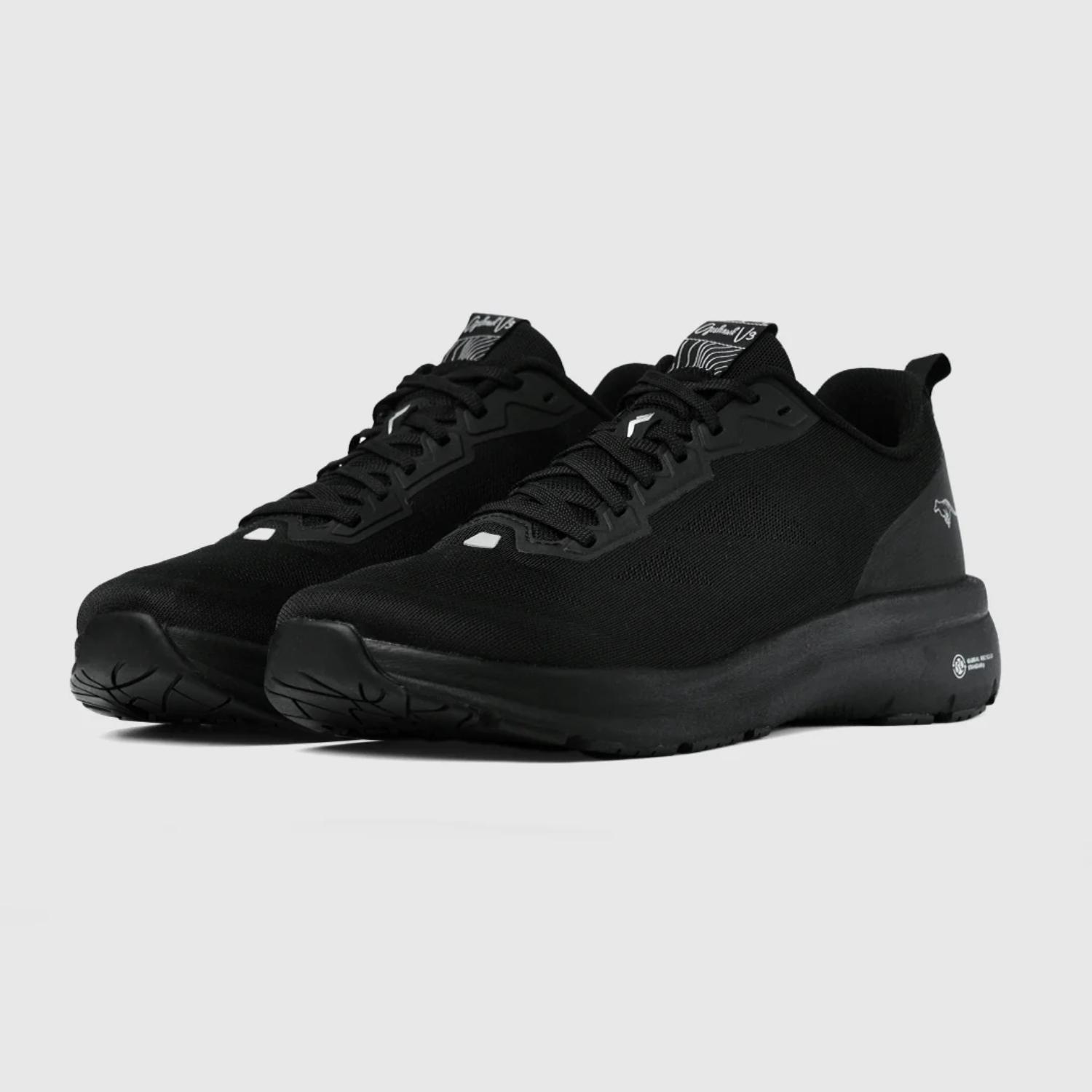
Before optimizing you have to locate the problem. For a quick look at a specific page, browser extensions like Web Developer or the WAVE accessibility evaluator flag images with no alt or empty alt. For a site-wide analysis, a crawling tool like Screaming Frog lists every image at once, its current alt and its weight, and filters those that are empty or too long. SEO plugins in WordPress also warn about images without alt. And do not forget Google Search Console, useful for seeing which images are indexed and spotting opportunities. Always prioritize by impact: first the images on the pages that drive the most traffic and conversion, usually product pages and categories, and leave the decorative ones for last. This work is part of any well-done technical SEO optimization.
When you inherit hundreds or thousands of images with no alt, writing them by hand one by one is not realistic. Here AI helps a lot: current vision models analyze each image and generate a coherent description en masse, and there are plugins and tools that automate the process across the entire media library. It is the fast route to go from thousands of undescribed images to a decent baseline in little time. That said, AI is the starting point, not the finish line. Always review the result, especially on product pages, where the machine may get the object right but miss the brand, the model or the commercial nuance that really matters for ranking. Our recommendation is to use AI for volume and human review for the critical pages..jpeg)
In WordPress there are several ways to manage ALT text. Rank Math includes an option to automatically add the alt attribute (and the title) to images that lack it, generating it from variables such as the file name or the post title. It is useful as a safety net so no image is left without alt, but it is worth understanding its limit: it fills a gap, it does not write a quality description. An alt based on the file name is almost never a good alt.
As alternatives, Yoast and SEOPress offer equivalent functions, and AI generation plugins produce descriptions far richer than variable-based filling. The approach we apply in WordPress projects is to combine both: automatic tagging that guarantees nothing is left empty, AI to cover the bulk of the library and manual writing on the images that drive business. If you want to go deeper into how this fits into a larger strategy, we work on it within our SEO for WordPress service, and in online stores the alt detail on each product page makes a real difference. In any case, well-crafted ALT text is one of those quiet improvements with a great return, and at our agency we can help you implement it at scale.
Hello! drop us a line


ALT text is the most misused SEO field, and one of the highest-return.