
Francesc Sánchez


Normally in SEO we work to rank websites, but that stopped being the only case a long time ago. Today we also apply SEO methodology to rank our listings on Google Maps, the products we have listed on Amazon, or to rankmobile applications. This last field is what we know as ASO, corresponding to the acronym for Applications Search Optimization.
Although ASO was initially considered only metadata optimization to gain visibility in app stores, today it is something broader and more complex. We could define it as the set of techniques aimed at maximizing the organic visibility of a mobile application (APP), while also boosting the number of downloads. It would be more like an SEO + CRO + Funnels approach. There are other very important aspects in the business models of apps such as In-App Purchases, Subscriptions, Ads, but this would already fall outside ASO itself, becoming optimization and monetization tasks.
First, we must work on visibility in the main app stores of the two most common operating systems, the well-known Google Play Store and Apple’s App Store. These are the two platforms you should consider a priority, as they concentrate the vast majority of searches and downloads.
Second, device manufacturers’ app stores should not be underestimated: Xiaomi or Samsung, for example, have their own stores, and they should not be ignored. But they are not the only manufacturers with their own stores; there are many more.
Third, you should consider improving your ranking in alternative app marketplaces beyond the two major ones and manufacturers. Aptoide is a major reference in the sector, as is the Amazon App Store, and although there are more, it will depend on the markets you target.
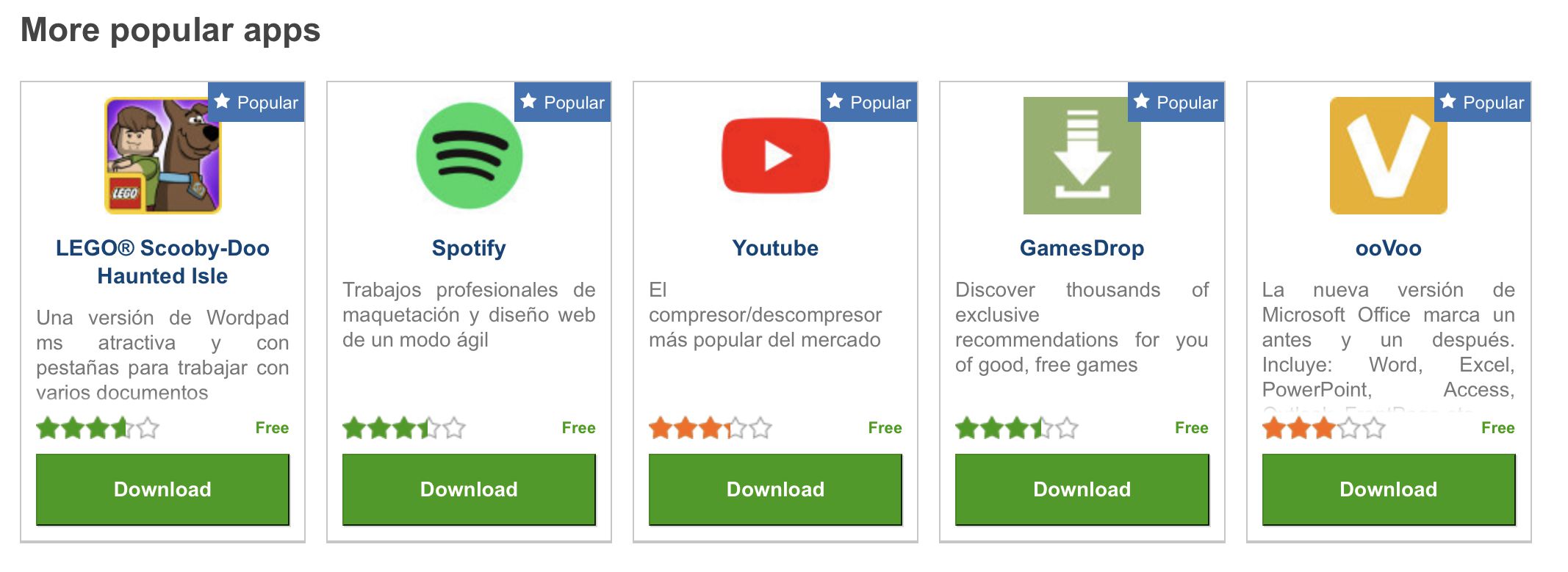
Finally, you should take into account informational portals that offer information, reviews and rankings of applications. Visit portals such as Softonic or Appsdrop to analyze your visibility in those spaces and strengthen your presence there.
First, we must carry out a keyword research. It is somewhat similar to how we would do it on the web, but adapted to this scenario. We recommend starting with your own initial list, based on knowledge of your product and users. Once we have list 0, we analyze competitors to infer which concepts they are working on and complement our list — many keywords will have slipped past you due to bias. With this list, we search using the keywords with several tools. The most recommended are:
With a mature list, as we do in traditional SEO, we must validate keywords based on a good balance between high search volume and reasonable difficulty. We must be realistic: if larger keywords are out of reach, it’s better to go for secondary or long-tail terms.
Once we obtain the final keyword list, we will optimize our metadata in coherence with the target keywords. Some fields we can optimize:
Once the app is running, Google provides relevant statistics we can use to our advantage. Similar to Google Search Console, we can see which keywords generated ranking and visits, and those with higher conversion rates.
App stores work with localizations and offer translations and adaptations for local audiences. In Google’s ecosystem, the tool automatically translates all our copy into store languages, ranking us effortlessly for multiple languages and regions. In iOS this is not the case, and we must upload content in all languages. This opens many opportunities: instead of offering a mere translation, we can better adapt content to each region. If we have resources, it is better to do proper keyword research and manual optimization for main markets. We speak of region, not language, because it matters to adapt content differently, for example, for UK English vs. USA English. VERY important: we must not only adapt text by countries or regions — we must also adapt screenshots.
If we start ASO work with an app that has already been active for some time, it is advisable to take a snapshot of its initial situation before our actions: visibility, which keywords it ranked for, positions, etc. We must establish KPIs that are relevant, measurable and comparable over time. For example, we could measure impressions in the app store, visits to the product page, number of installations or revenue. Regarding installations, it is interesting to separate them by platform and channel (search, browse or paid). And although income is complex to measure, we should incorporate these metrics because monetization is at the core of apps — they are not a branding tool, they exist to generate income, and if we don’t contribute to that, we’re useless.
Once we implement an ASO action plan, we should wait 20-30 days and start assessing the impact. It’s useful to implement ASO optimizations in blocks and set up a dashboard (Looker Studio or your preferred tool) to track their monthly performance.
Both Google and Apple notify us of critical errors in our apps. An app becoming unavailable or having severe issues badly impacts user experience. This is very important for stores and directly affects visibility. The metrics called ANR (Application Not Responding) and Crash Rate must be minimized as much as possible — always staying below your sector's average. You must monitor these app vitals the same way we minimize 4xx or 5xx errors in traditional SEO. Severe and recurring problems may lead to penalties that are hard to recover from.

Both Apple and Google have sections to feature applications, and they’re not always paid. We can get our app highlighted as game of the day in a category, or featured when we launch new versions, major improvements, in-app events or special editions tied to seasonality or major events. The platforms have forms to request this visibility push, which can be leveraged if properly documented — but what we offer must be relevant. Creativity, disruption and great presentation are key.
This is an Apple functionality for app-related events. Generally tied to seasonality: for Christmas, Easter or a World Cup, we can launch a temporary novelty inside the app. To gain visibility we must publish it in our Apple Store profile (in features), including good copy and appealing screenshots. This helps both with new user acquisition and retention among existing users. It’s about playing with freshness, just like we do with blogs or Business Profiles.
Both Google and Apple allow pre-launch. During that period we can start gathering pre-registrations and begin optimization and indexing work.
Anything that boosts installations helps indirectly improve visibility. This may result from multiple strategies: conversion-oriented copy optimization, in-app events, featured placements, paid campaigns, or killer screenshots. Stores prioritize apps with high download rates and strong retention.
Reviews are a key factor in relevance and ranking. We must work CRM to maximize the number of reviews, ensuring they include written comments, and keeping an average of at least 4.5 whenever possible. Good reviews containing target keywords will boost visibility. Once users are on the product page, a large volume of good reviews increases trust. The app must deliver: the best ASO strategies collapse if users install the app and it doesn’t meet expectations.
Although for experimentation or basic projects we can use standard SEO tools for many ASO tasks, if you want to do serious work it’s highly recommended to use a specialized ASO tool. APP Radar and AppTeak are the most well-known and complete in terms of features, though others like SensorTower or Mobile Action are also worth considering.
For a tool to be useful, it should provide:
Although strictly outside the ASO definition, we must mention this area because it is essential for app success — I’d dare say indispensable.
Just like in Black Hat SEO, these practices cannot be recommended because they break rules and involve enormous risk. Still, you should know them since they are part of the ecosystem, and if you pay attention, you’ll spot them among competitors, especially in highly competitive and murky niches (dating, gambling, etc.).
Some common practices:
None of these are worth it. If caught (and you will be), gains will be removed, specific keywords may be blocked, your app may be suspended — or even your developer account.
In apps it is crucial to apply CRO practices to increase conversion rates. Here we do not measure visibility but conversion actions: impressions, visits to the product page, downloads and view-to-download ratio. Key points that help:
Once the essentials are set, the elements with highest conversion impact are:
As you’ve seen, ASO shares the essence and philosophy of SEO applied to search engines and other platforms, so if you already have knowledge and experience in this field, it may be a good starting point. However, there are very different aspects to consider: environments, rules and referees change, and the focus shifts more towards conversion and monetization. Therefore, to achieve ambitious goals you will need specialized professionals. Finally, ASO cannot be addressed in isolation — it is conditioned by product roadmap, paid and offline campaigns, and the investment capacity and patience of the project.


Hello! drop us a line

ASO shares the essence and philosophy of the SEO we apply in search engines, but it has particularities you need to know.