


19 / 12 / 2025
SEO for ChatGPT: guide to dominate the answers

Bruno Díaz
—Marketing Manager
SectorLet's talk about
I believe the question clients have asked me most in 2026 has been “How do we appear in ChatGPT answers?”. This is the concern of most CEOs and marketing managers. We won’t debate here whether this should be their top priority, since in many cases it shouldn’t be, but I understand the concern. I’ve explained to each of them what we are doing so their business achieves maximum visibility in ChatGPT.
It would be pretentious and misleading to claim that we have the magic formula to appear in ChatGPT. The tool is very new. Its logic and algorithms are complex, evolving and opaque. At La Teva Web, we have been analyzing its responses since the chat was launched. Through extensive testing, we’ve identified reasoning and response patterns that, across hundreds of projects, have given us a broad and diverse sample that very few agencies worldwide can access. With full transparency, we’ve gathered here all the ChatGPT positioning factors available to the community. This is not a magic formula. It’s a working philosophy in constant evolution. Use what fits your strategy.
When the goal is to be cited
In 2026, the interaction between users and AI tools like ChatGPT has changed significantly. For many content creators, the goal is no longer to attract referral traffic directly to their website, but to be cited as a reliable source in AI-generated answers. This differs from traditional SEO, where the main objective is to generate traffic through direct links from search results.
The value of being cited by a generative AI like ChatGPT lies in the ability to directly influence user perception, especially when the model selects and highlights content fragments. Instead of relying solely on clicks, the objective is to be recognized as a trusted source that provides relevant and accurate information for user queries. This type of visibility is not measured only in traffic, but in how AI validates and presents your content as an authority on a specific topic.
In our case at La Teva Web, direct traffic from ChatGPT represented only 1% of total visits. However, the real impact is on lead generation. Around 15% of the leads received to date come from interactions related to ChatGPT-generated answers, a significantly higher ratio than traditional referral traffic. Many of these leads never visited our website directly from ChatGPT. This proves that even if direct AI traffic is low, being cited creates real business opportunities.
This approach changes digital marketing logic. We move away from focusing on referral traffic and instead prioritize business generation through strategic citations. For us, the key is that users interacting with ChatGPT find our information relevant and useful, increasing the probability that our services are considered.
This same strategy focused on citations rather than direct traffic is applied to our clients. We help them create content optimized not only for visits, but for being recognized and cited by AI models as authoritative sources. This includes structured content, implementation of structured data such as Schema.org, and organizing information so it can be easily extracted and presented in AI-generated responses.
When the goal is to be cited by ChatGPT and other generative AI systems, optimization focuses on quality, relevance and accessibility of information rather than traffic generation. Being cited becomes a powerful lever for qualified leads and real business growth.
You won’t find a more complete SEO guide for ChatGPT
- When the goal is to be cited
- 1. Introduction
- 1.1 Understanding how ChatGPT processes your query and returns its answer
- 1.2 ChatGPT’s agreements (and conflicts) with other corporations: Microsoft, Google and the media
- 1.3 Eligibility criteria in ChatGPT listings: why are some sources cited more than others?
- 1.4 ChatGPT Shopping: toward an agent-based purchasing and service management model
- 2. Preparing your website for ChatGPT
- 3. ChatGPT and other websites: external sources and their influence on visibility
- 3.1 The importance of sources
- 3.2 ChatGPT’s preferred sources by country
- 3.3 ChatGPT’s preferred sources by topic
- 3.4 Sources and citations used by ChatGPT for specific prompts
- 3.5 Social media
- 3.6 Directories
- 3.7 Media
- 3.8 Local SEO platforms (Google, Bing...)
- 3.9 Review platforms
- 3.10 Certifications, associations and awards
- 3.11 Being present and leading rankings: Rank Building
- Frequently asked questions about SEO for ChatGPT
- Articles and useful resources
1. Introduction
1.1 Understanding how ChatGPT processes your query and returns its answer
When we interact with ChatGPT, what actually happens in the system’s backend is a complex text analysis and generation process involving multiple stages. Through a language model based on deep neural networks, AI can break down a query into semantic fragments, analyze its components, and generate a coherent and relevant response.
This process begins when a query is submitted to ChatGPT, which is first transformed into a numerical vector. Natural Language Processing (NLP) models like ChatGPT do not understand language the way humans do. Instead of directly interpreting words, the model converts text sequences into numerical representations that reflect relationships and patterns between words and concepts. These representations are processed through successive layers of the neural network, a deep learning system that, at scale, mimics how the human brain processes information.
Once the model has analyzed and broken down the query, it uses what is known as “attention” to determine which parts of the input are most relevant and should have greater influence on the generated answer. Attention allows ChatGPT to weight different pieces of information and assign more or less importance depending on their relevance within the question’s context. For example, in a query that includes multiple topics, the model determines which elements are key and how they relate to each other in order to construct a precise and contextualized answer.
To perform this task, ChatGPT is trained on large volumes of data from a wide variety of sources, including books, academic articles, web pages, and other online texts. This data trains the AI to understand and generate language fluently, but it also limits its responses to the information it was trained on, without typical access to real-time data or external sources beyond its existing knowledge base.
Once the model has selected the most relevant fragments, it begins constructing the final response. This step involves generating text that is not only grammatically correct but also semantically coherent and contextualized. During this process, the model uses advanced optimization techniques such as token sampling and temperature regulation to produce answers that are both accurate and natural. “Temperature” refers to the degree of randomness in word selection, while “token sampling” selects the most probable word sequences according to the conversational context.
Understanding how ChatGPT selects and organizes information directly impacts how your website or document content may be extracted and used in its responses. To increase your chances of appearing in these responses, content must be well structured, semantically clear and accessible so the AI can identify and use it effectively. Considering how the model processes queries also helps you understand what type of content it prefers and how to optimize it for AI-generated results.
Ultimately, processing a query in ChatGPT is not simple text analysis but a deep technical process involving semantic decomposition, attention mechanisms and text generation from a vast trained data pool. While fully understanding these processes may require advanced technical knowledge, grasping the fundamentals is essential for any content creator who wants to appear in ChatGPT-generated responses. If you are not familiar with these concepts, consult our AI SEO Dictionary first.
ChatGPT’s knowledge pool, citations and sources
One of the most fascinating and complex components of ChatGPT is its access to what can be described as a “knowledge pool,” a vast database that feeds the model and allows it to generate detailed and contextualized responses. This knowledge pool is not built from a simple collection of facts, but from patterns derived from a massive variety of texts, ranging from academic articles to digital media content. However, one of the evident limitations of this approach is that ChatGPT does not provide direct citations or verifiable sources for the information it uses, opening a debate around authorship and intellectual property that we will not address here, but which is undeniably relevant.
Instead of citing explicit sources, ChatGPT generates its responses based on inferences drawn from this “pool,” which may involve using fragments of content without acknowledging their specific origins. This has generated debate about copyright, as content creators may see their materials reproduced by AI without receiving the visibility or compensation traditionally associated with citations. The unwritten Internet agreement — providing content in exchange for visibility, traffic and recognition — has been disrupted.
For content creators and marketers, this reinforces the importance of ensuring that information is not only well structured, but also optimized so search engines — including AI models — can efficiently identify and extract the most relevant fragments. In this context, page structure is critical: AI engines prioritize content that is presented clearly and hierarchically, with defined headings, subheadings and paragraphs that allow models like ChatGPT to extract precise answers.
In addition, a page’s relevance is partly determined by its visibility in search engines and its ability to be effectively crawled. Pages that are properly indexed and have a strong link profile are more likely to be selected by AI systems to generate responses. However, webmasters and content creators must understand that AI optimization is not only about visibility but also about accessibility. Well-structured content is useless if AI algorithms cannot access it due to technical barriers such as poorly configured robots.txt files or indexing restrictions.
This is only the beginning. As search engines evolve to integrate AI systems, new methods of ensuring proper attribution may emerge. These could include specific metadata implementations or new ways of marking content to ensure visibility in generative AI systems. In this sense, structure and accessibility remain essential for traditional rankings, but now require an additional layer designed specifically for AI bots.
1.2 ChatGPT’s agreements (and conflicts) with other corporations: Microsoft, Google and the media
Since its creation, OpenAI (the company behind ChatGPT) has established strategic agreements with major technology companies and media organizations. These agreements influence not only how AI operates, but also which content is more likely to be cited in its responses.
Microsoft: partial owner and frequent source
One of the most relevant agreements is with Microsoft, which, beyond being OpenAI’s primary investor, is also a key infrastructure and data provider.
This agreement grants Microsoft privileged access to OpenAI systems and vice versa, allowing ChatGPT more direct access to certain sources indexed by Bing. As a result, content indexed in Bing is more likely to be cited frequently by the AI. Bing-based sources are particularly relevant because the search engine acts as a reliable consultation layer for ChatGPT.
Google: tensions over data control
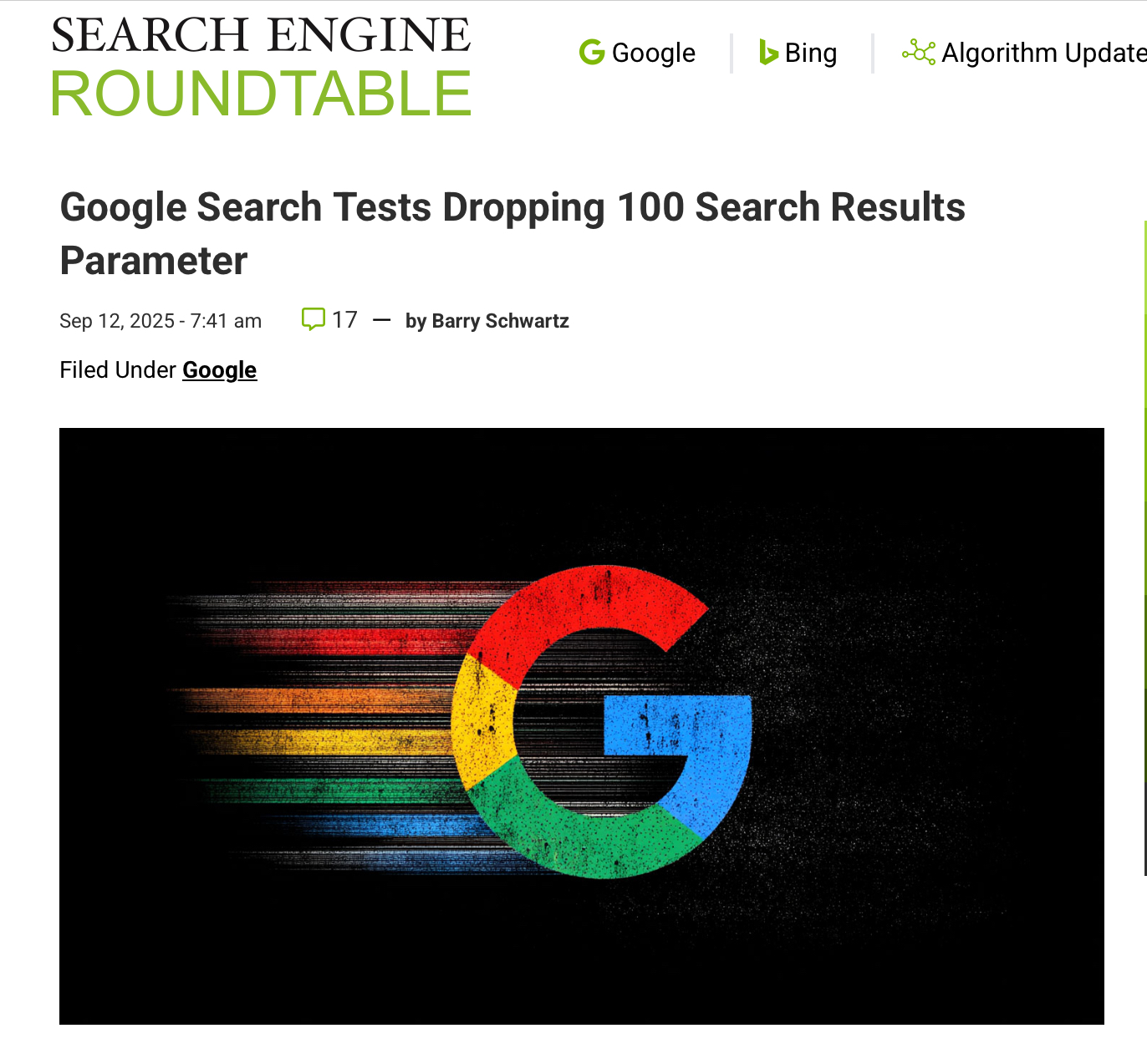
In contrast, Google has been one of OpenAI’s main competitors in this space. While Google has dominated the search market for years, the emergence of ChatGPT has challenged that dominance. The relationship between Google and OpenAI has been tense, particularly regarding scraping data from Google Search or Google Maps (the extraction of information from results). On multiple occasions, Google has expressed disagreement over how OpenAI uses information from its web results to feed the model without formal agreements.
Media agreements: the case of El País
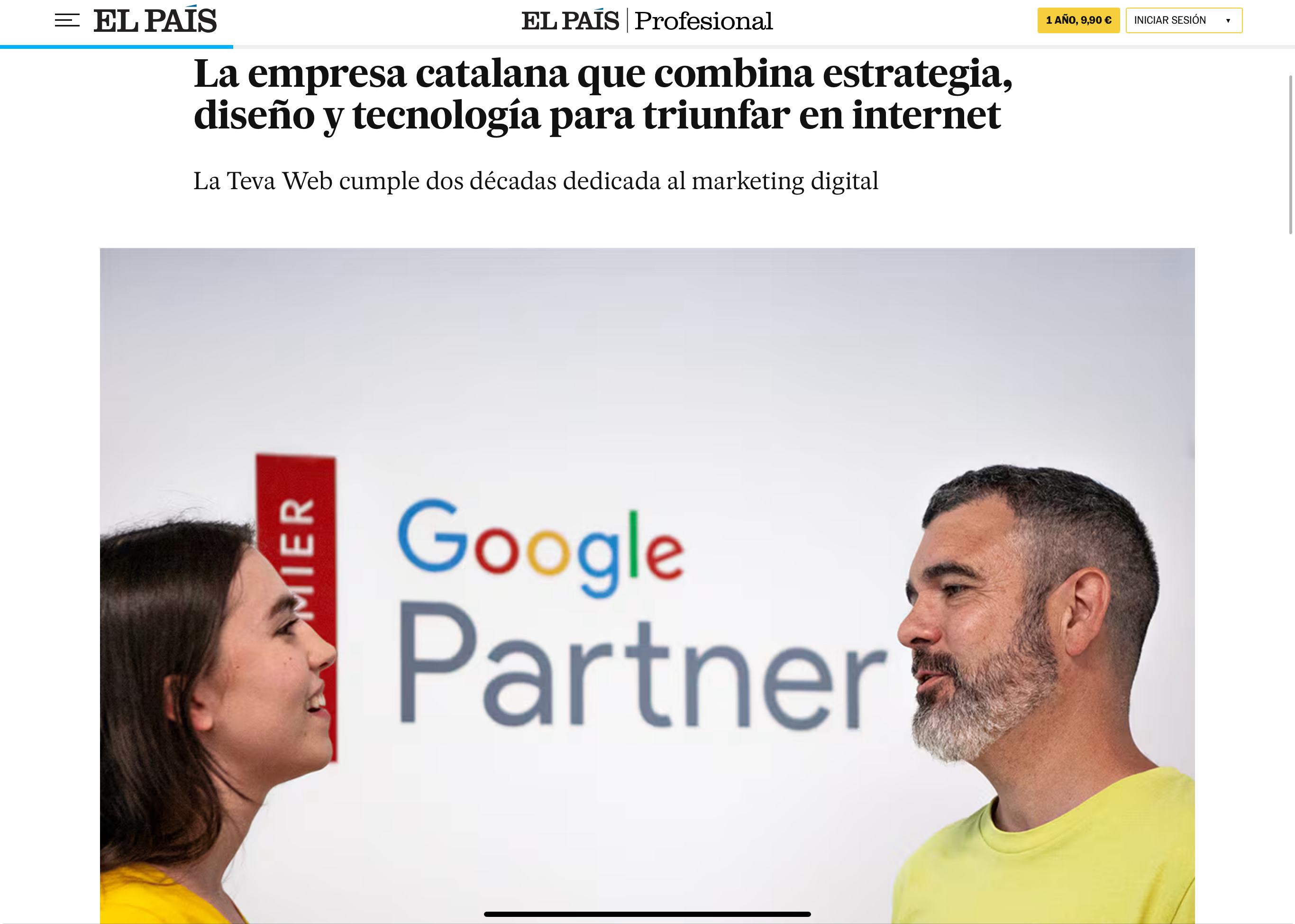
Regarding media organizations, OpenAI has established relationships with several outlets to ensure their content is prominently included in ChatGPT-generated responses. One clear example is the agreement with the Spanish newspaper El País and other Grupo Prisa media outlets, which have become frequent reference sources for the AI.
This agreement allows El País articles to be cited more frequently, especially in the context of news and current affairs. These types of agreements have also sparked debates about intellectual property and access to information, since not all media outlets have equal visibility within ChatGPT. It is evident that we are facing a less democratic Internet.
In summary, the ecosystem of agreements and conflicts between OpenAI, Microsoft, Google and media companies is defined by continuous negotiation over data access and content prioritization. Companies that establish closer relationships with OpenAI benefit from greater visibility in ChatGPT-generated responses, while others seek to maintain control over their own data. This creates a competitive and opaque environment that shapes how users interact with AI. The key is understanding these dynamics and acting accordingly.
1.3 Eligibility criteria in ChatGPT listings: why are some sources cited more than others?
Although OpenAI has not published an exact algorithm explaining how sources are prioritized when generating responses, it is evident that ChatGPT follows a set of principles and factors that influence how the system selects, ranks and cites content. These criteria aim to ensure responses are useful, accurate and based on reliable sources.
Content quality and clarity
ChatGPT tends to prioritize sources that provide clear, well-structured and easy-to-understand information. Responses formatted cleanly, where information is presented concisely and without ambiguity, are easier for the model to process and more likely to be cited. It is important to include “snippable” sentences: clear, compact answers to common questions (for example, direct definitions or explanations) are more likely to be extracted by the model.
Authority and relevance of the source
ChatGPT generally gives preference to sources with strong authority and relevance in the subject area. This is evaluated through indirect signals such as backlinks, mentions in reputable media, and presence on social platforms or other high-visibility spaces.
Through domain authority signals, ChatGPT selects trusted sources such as recognized media outlets, universities or companies with proven expertise in the topic. Authority is determined by factors such as domain age, sector relevance, traffic, user experience signals, and the quality of links and mentions referencing the site.
Another frequent pattern is temporal relevance: recently updated content or topics that evolve constantly (for example, technological developments or research updates) tend to carry more weight.
Indexing process and accessibility
One of the main barriers to being selected by ChatGPT is that content must be easily accessible and properly indexed by search engines. This includes strong indexing in engines like Google and Bing, signaling that the content is available for retrieval.
Trust and transparency of the source
ChatGPT aims to provide responses based on trustworthy sources. This includes websites that clearly reference their data and avoid misleading or unverified information. Sources that are transparent about where their information comes from (for example, citing studies, statistics and references) are generally preferred. Naturally, websites with a positive online reputation — without a history of misinformation or legal issues — are more likely to be considered, although experience shows this is not always consistent.
Source diversity
To reduce bias, ChatGPT likely prioritizes diversity of sources. While authoritative sites may be cited more often, the AI also incorporates information from a variety of perspectives. It seeks balance in complex topics such as politics or health. You will often see how it combines broader cultural and linguistic perspectives to provide more complete responses.
Optimization for generative AI (GEO)
Optimizing content for generative answer engines is critical. Some websites are already adapting content specifically to appear in systems like ChatGPT. If you are not doing so, you should start. The use of microdata or schema markup, both traditional and advanced, helps AI better understand context. We increasingly see cited sources implementing AI-oriented content design: pages optimized for fast, precise, extractable answers (such as FAQ lists or structured content formats) are more likely to be referenced.
1.4 ChatGPT Shopping: toward an agent-based purchasing and service management model
Imagine a future where ChatGPT acts not only as a search assistant but as an autonomous purchasing agent capable of making buying decisions on your behalf. This model is already beginning to take shape through the integration of generative language models with eCommerce platforms and digital marketplaces.
If you have not tested it yet, now is the time. This is only the beginning: its intelligent filtering and comparison capabilities allow it to evaluate products based on price, quality, reviews, sustainability and other criteria across multiple online stores. The most powerful aspect is personalization. We are entering an era of customized recommendations: leveraging contextual information such as preferences, purchase history and explicit user instructions, ChatGPT can suggest products in real time tailored to each individual. The next natural step is direct purchasing: ChatGPT could execute purchases through connected platforms like Shopify or Etsy, managing selection, payment and confirmation autonomously.
Beyond shopping, ChatGPT can expand into service management, acting as a comprehensive digital assistant: scheduling appointments, booking services and managing reservations can be handled by AI agents.
Consider travel planning and reservations. One of the most significant changes will be ChatGPT acting as a digital travel agent that not only recommends destinations or provides information, but also manages the entire process: searching and comparing flights, booking accommodation and activities, and even organizing full itineraries — all from a single interface under your supervision.
The real shift in the near future will be the integration of all these services into a unified agent-based ecosystem. Instead of interacting with multiple platforms or apps, ChatGPT becomes the central control point for purchases, bookings and services, combining reasoning capabilities with personalization configured by the user.
This transition toward agent-based purchasing represents a radical transformation in how we interact with consumer services and technology: automated decision-making, time optimization and advanced personalization (possibly the beginning of ChatGPT Ads).
In this scenario, ChatGPT positions itself as a multifunctional assistant, fundamentally transforming the global purchasing and service management experience. Are you prepared for a future where your AI handles your purchases and reservations? Think about the entire customer journey and how your brand can be the answer at each stage through its AI assistant.
2. Preparing your website for ChatGPT
2.1 Doing SEO as a first step: the fundamental pillar
Before diving into optimization for ChatGPT, you must ensure that the foundational pillars of traditional SEO are properly implemented. This includes working on all core areas that define digital positioning: technical SEO, strategic SEO, content SEO and authority building.
This is the first step. Once this foundation is solid, you can move into more advanced steps related to direct interaction with AI systems, such as optimization for generative answer engines (GEO). SEO has not disappeared; it has evolved. AI SEO is simply an extension of SEO. One cannot exist effectively without the other.
2.2 Understanding how ChatGPT accesses and processes information
It is important to understand that ChatGPT does not “read” web pages the way humans do, nor does it operate exactly like traditional SEO crawlers such as Googlebot. While a human user visually navigates and interprets context, ChatGPT processes the HTML structure as structured text. Through mechanisms such as crawlers and HTTP requests (for example, GET requests), the AI extracts available HTML content without rendering the page like a browser.
However, ChatGPT can interpret HTML code and extract key structural elements. This includes headings (H1, H2, H3, etc.) to understand hierarchy, paragraphs, lists and bold formatting to interpret context and importance, and links to understand relationships between resources.
There is another important consideration: currently ChatGPT does not execute JavaScript. Pages that rely heavily on JavaScript to dynamically load content may be more difficult to process. While the AI can access raw HTML through crawling, content loaded exclusively via JavaScript may not be available at processing time.
2.3 Allowing ChatGPT to access our website
It is essential that ChatGPT can easily access your website to extract and process information. Unlocking your content for crawlers and AI systems ensures your pages can be indexed and used.
To verify this, review the following:
- Check your robots.txt file to ensure relevant pages are not blocked.
- Audit your server and CDN to confirm no custom rules or access limitations are blocking AI agents before they reach your HTML. Make sure legitimate crawlers are not misidentified as malicious bots by firewalls or anti-bot systems.
If you use Cloudflare, pay attention
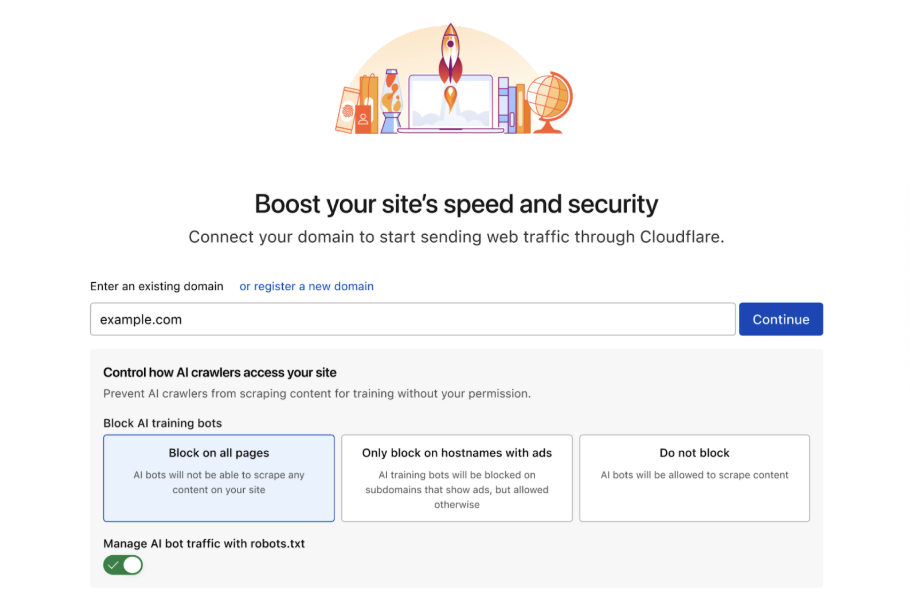
Cloudflare is a CDN and web security service used by a significant portion of the Internet (around 20% of all websites) and by default may block AI crawlers unless configured otherwise.
If your site runs behind Cloudflare and you have not explicitly allowed AI bots, tools such as ChatGPT, Claude, Perplexity or Copilot may not access your content. Even if your robots.txt allows crawling, Cloudflare security settings could block bots before they reach your HTML.
2.4 Making it easier for ChatGPT to access our website
Once your site is accessible to crawlers, the next step is to further facilitate AI access. Here you must carefully select the type of content and label it properly.
If you have multimedia content (videos, infographics, images), also make sure to tag it correctly so ChatGPT can include these elements more efficiently in its responses.
Avoid or minimize JavaScript
Excessive use of JavaScript in your content may interfere with proper indexing of your page. Pages with heavy JS usage can make it difficult for ChatGPT to access information, as AI systems often struggle with content that requires complex browser-side execution.
Instead, it is recommended to use static HTML as much as possible and minimize JavaScript dependencies in key sections of the page, such as headings, text paragraphs and important links. In any case, if you have been working on SEO, you have probably already taken this into account, right?
Content structure: headings, TOC and FAQs
A clear content structure benefits not only users, but also ChatGPT. Use hierarchical headings (H1, H2, H3, etc.) to organize ideas logically. The crown jewels are:
- Table of contents (TOC): Improves navigation for both users and search engines.
- Frequently asked questions (FAQs): This allows AI to identify and extract answers more easily, increasing the probability of being cited.
In general, it is recommended to use short and direct paragraphs (you may have noticed I struggle with that, but everyone has their style and that’s what matters most), and to use numbered or bulleted lists to organize information in an accessible way.
Schema markup
Implementing Schema markup is one of the most effective methods to ensure your content is properly understood and processed by ChatGPT and other search engines. The use of structured data (schema) allows your page to be interpreted more accurately, ensuring that AI extracts the correct information and presents it appropriately in its generated responses. Here you have space within the HTML to complement what you display on the front end: more details, context, relationships, mentions, entities, depth.
Llms.txt?

A new emerging practice in the AI space is the llms.txt file. The llms.txt is a file used to provide guidelines to language model crawlers (LLMs), such as ChatGPT, Claude, Bard, and others, indicating which parts of a website’s content may or may not be used. Similar to robots.txt for search engines, llms.txt aims to control AI bot access to a website, specifying whether they are allowed to process and extract information from a page for use in their generated responses.
The llms.txt is an emerging topic that has gained some traction, although it is still not a widely adopted or formally agreed standard across the entire community. However, growing interest from organizations managing AI and how crawlers access web content makes it a relevant practice for the future, especially if the model continues to evolve. I don’t have a crystal ball, but I would consider the following:
- Growing adoption across thousands of websites: more and more sites are implementing this solution, including some highly relevant ones. Additionally, some online tools or SEO plugins such as Rank Math are incorporating features that allow us to create the file easily, facilitating its implementation.
- Studies and implementations from platforms such as Wix: according to research from platforms like Wix, LLM crawlers are beginning to check llms.txt files and process the information contained there. This suggests that the industry may start adopting this file as a standard way to allow or restrict AI access to data, or at least that they are evaluating it. Nobody wastes crawl budget.
- Similarities with Schema.org and robots.txt: llms.txt is in a stage similar to where schema.org was in its early days. At first, it was not universally adopted, but over time it became an essential practice for web optimization and is now an integral part of SEO strategies. If llms.txt follows the same path, it could become a standard in the future, especially as more AI platforms adopt it and crawlers begin to respect it. If implementation and community adoption continue to advance, LLM bots will very likely end up adopting it as well.
So at this point you may be asking: "Should I implement llms.txt?". My answer, as a seasoned SEO professional from Galicia, is a solid DEPENDS. It essentially depends on the effort required. Unless the landscape changes, I would say: if it takes little effort, go ahead; if it is tedious or expensive, there may be higher priorities right now.
Submitting our products to ChatGPT Shopping
The integration of ChatGPT with commerce platforms (such as ChatGPT Shopping) opens new possibilities for e-commerce. Submitting your products directly to ChatGPT is a step toward ensuring our products are present in the new agent-based purchasing model, where AI can filter, compare and recommend products autonomously.
To integrate your products, it is important to structure them clearly, with accessible and properly marked information such as prices, descriptions, images and purchase options. Schema markup for products and other optimization tools will make it easier for ChatGPT to access this information and use it in generated responses for users.
In addition to Schema markup, you can send stronger signals about your products to ChatGPT by configuring your feed in Google Merchant Center, or by connecting your products to comparison engines and marketplaces that are commonly referenced by agents, increasing your chances. There is currently no direct way to submit a product feed to ChatGPT, although OpenAI has created a waiting list for merchants interested in providing product feeds and enabling Instant Checkout for their catalog. Stores can submit their information through a “merchant application” form, and the OpenAI team contacts them for progressive integration. However, if you use Shopify, this is already solved, as feeds are sent directly.
Verify your domain in ChatGPT
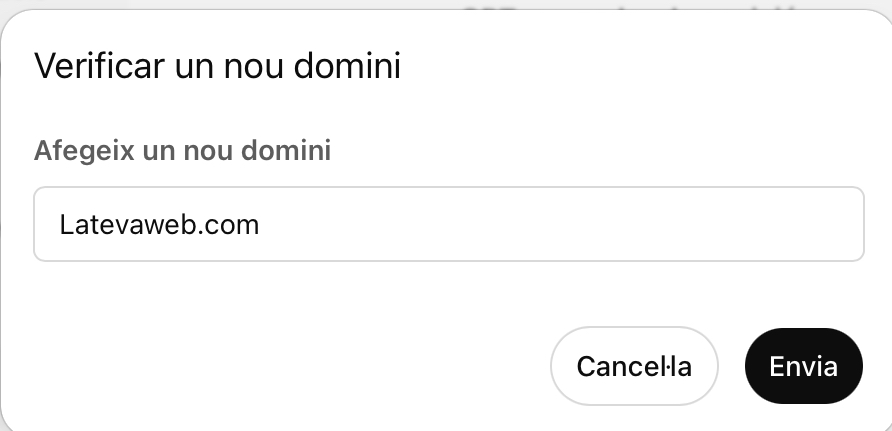
It is crucial to verify your domain with AI platforms such as OpenAI to ensure that ChatGPT can properly access your content. Like other search services, domain verification helps ensure that your website content is legitimate and authorized to be processed by OpenAI’s crawlers. This may include integrating your website into a controlled environment where crawlers have access without additional restrictions. To validate it, you can easily add it from the ChatGPT settings panel; you only need access to your domain’s DNS records to complete the verification.
Custom GPTs: Create your own GPT
The ability to create Custom GPTs for your brand opens a direct path for your company to have an exclusive channel within ChatGPT. These customized GPTs can be designed to interact with users, answer frequently asked questions and recommend products or services specifically tailored to your business.
Creating your own GPT allows your brand to stand out in generative AI results, as it can be customized with your company’s voice, tone and specific content. In addition, these GPTs can facilitate business discovery, helping generate traffic and improve user experience. Or simply add value to your community within your niche:
Website content only for LLM agents
As more websites begin optimizing their content for LLMs such as ChatGPT, hundreds of sites have been detected incorporating hidden content invisible to the human eye and to Google, intended solely for LLMs to read. It is something you can do and it may help position in ChatGPT, but by fixing one thing you may damage something equally or more important.
You should know that these practices fall under black hat SEO, specifically cloaking. Cloaking is a practice where different content is shown to users and to crawlers. Although it may be tempting to hide specific content only for AI bots, this practice is not recommended and may be penalized by traditional search engines and potentially by AI systems such as ChatGPT.
It is important to ensure that the content available to ChatGPT is accessible in a legitimate way and not manipulated. Any attempt to hide content from AI crawlers may be considered deceptive, negatively affecting your site’s visibility in AI systems and beyond.
Core Web Vitals WPO (Web Performance Optimization)
Website optimization remains a fundamental pillar to ensure a good user experience and greater visibility in search engines. In addition to traditional SEO, Core Web Vitals (metrics that include loading time, visual stability and interactivity) are essential for ChatGPT and other AI crawlers to process your content quickly. Ultimately, crawling resources are limited, so the faster we serve content, the more those bots can consume. If your website is optimized for high performance and fast loading times, you increase the likelihood that your content will be efficiently processed and extracted by AI bots.
SEO in Bing
Since ChatGPT is partially linked to Microsoft, it is directly influenced by SEO in Bing strategies. Optimizing your site for Bing involves specifically working on aspects such as meta tags, which had previously taken a back seat in the dominant search engine.
In this context, it is very important to configure and optimize the Bing Webmaster Tools tool, as it serves as the compass and guide for ranking in that ecosystem. While you are at it, use its IndexNow feature to ensure new content is indexed faster, improving the probability of being cited in ChatGPT-generated responses.

EEAT (Expertise, Authoritativeness, and Trustworthiness)
The concept of EEAT is increasingly relevant in SEO, and this includes ChatGPT, as we observe that it takes these signals into strong consideration. The experience, authority and trustworthiness of your website content and your brand beyond it will influence its ability to be selected by ChatGPT in generated responses. Some aspects that AI tends to favor:
- Publishing expert and authoritative content on your topics.
- Trusted external references that support your content.
- User reviews and relevant links.
- Certifications, awards or press releases
All of this contributes to increasing the visibility and citation of your content in AI systems, as they will seek brands, services and products that are relevant and recognized leaders in their sector.
FAQs
Frequently asked questions (FAQs) are one of the best ways to structure your content so it is accessible both to users and AI crawlers. ChatGPT can directly extract answers to common questions and use them in its generated responses. Your website FAQs can combine commercial interests with positioning goals, as long as their inclusion is natural and useful for both human and humanoid visitors.
Make sure you have a well-organized FAQ section, with clear and concise answers that address all relevant questions from your target audience. It is not just about having a standalone FAQ section (although that helps). We mean that parts of informational pages, services, categories, products or even a blog post can include a section to resolve user doubts, allowing ChatGPT to extract and incorporate them into its responses.

It is important that these FAQs respond to real demand and are properly labeled as such through schema markup.
Multimedia content
Multimedia content such as images, videos or gifs can enhance user experience, but it must also be properly optimized for AI. Ensure that images are correctly labeled with ALT text, videos are accessible, and infographics are well structured and explained. This will facilitate ChatGPT’s ability to use and present these resources correctly. Always provide formats compatible with the maximum number of browsers and those that are lightweight (svg, webp, etc.).
Special formats: guides, comparison tables, infographics
The use of special formats such as guides, comparison tables and infographics is excellent for enabling ChatGPT to extract useful and relevant content, AI loves this type of format. These forms of content tend to be easier to fragment and process, making them highly recommended to improve the probability of being cited in responses.
Copy format: conversation, question-answer
The question-and-answer format is ideal for ChatGPT, as it facilitates the extraction of clear and concise responses. Organize your content to include common questions (for example, in FAQ format or within your content structure) to improve accessibility and visibility. This forces us to rethink how we create web content going forward, and together with content freshness, encourages us to rewrite much of our previous content so that, by updating information and format, it can have a second life in this new context.
Optimizing merchant feeds with an AI-first approach
It is not enough to integrate products into ChatGPT Shopping or AI-based commerce channels. Your product feed must be optimized to be interpreted, processed and selected by generative AI systems. Merchant feeds and product pages become primary data sources for AI agents.
Provide complete and structured product data, including:
- Clear and precise titles.
- Detailed descriptions highlighting key features.
- Real-time pricing and availability.
- High-quality images from multiple angles.
- Comparison tables.
- Customer reviews.
- Frequently asked questions.
The most important thing is to be detailed while using plain language. You can include technical terms in the technical specifications if you wish, but in the visible product page we need to clearly understand the product and its usefulness in depth. You should cover aspects such as who this product is for, what pain it solves, its main benefits, how it compares with other products on the market, and reviews from real customers who have already tried it (social proof).
Blog topics and keyword research based on AI-driven searches
A fundamental part of preparing your website for ChatGPT is creating content aligned with AI-generated searches. ChatGPT is designed to provide detailed, context-based answers, so the content you publish must be optimized both for traditional searches and for AI-generated queries.
Steps to optimize your blog with this approach:
- AI-based keyword research: use AI-driven keyword research tools to identify which topics and questions are popular among users interacting with language models like ChatGPT. AI systems tend to detect patterns in queries, so obtaining this information will help you adapt your topics and titles.
- Conversational SEO optimization: AI engines such as ChatGPT respond more effectively to conversational content. Use natural language and question-and-answer structures in your posts to align with this search style.
- Alignment with search intent: beyond keyword research, it is important that your content focuses on specific search intents. This means creating articles that directly answer common questions or problems users are trying to solve, increasing the probability of being selected by ChatGPT.
- AI-adapted content creation: consider creating content specifically tailored for generative language models. This could include articles directly structured as ready-to-use answers that ChatGPT can leverage without needing to rewrite or adapt them. Already well-prepared.
Fresh content: write, rewrite, publish
Keeping your site updated with fresh content is one of the keys to improving visibility in ChatGPT. This and other AI engines favor updated and relevant content, which directly impacts source selection in generated responses.
How can you ensure your content stays fresh? Try this approach, which we are already applying in our projects and it works beautifully:
- Publish regularly: publishing new content consistently shows AI crawlers that your site is active and offering relevant, up-to-date information. It will make them want to come back more often, you’ll see.
- Rewrite and update old content: it’s not only about publishing new articles, but also about updating and improving existing posts to reflect recent changes in the topic or industry. This practice increases content relevance for generative language models that prioritize current information. In these cases, it is important to indicate both on the front end of the website and in the code the original publication date and the update date. We are not talking about minor tweaks, but about deep updates and expansions on the topic.
3. ChatGPT and other websites: external sources and their influence on visibility
3.1. The importance of sources
One of the main keys to appearing in ChatGPT is the fundamental role of sources. ChatGPT, like other language models, extracts information from multiple sources to generate its responses. It is essential that your content appears in sources that ChatGPT considers reliable and relevant. Because it’s called generative AI, but it doesn’t create anything from scratch — it always feeds on sources, and we want to be one of them.
Beyond being a response generation engine, ChatGPT acts as a content curation system, gathering information from various sources to deliver coherent answers. Reliable and well-established sources within their topic are more likely to be selected and cited by the system.
3.2. ChatGPT’s preferred sources by country
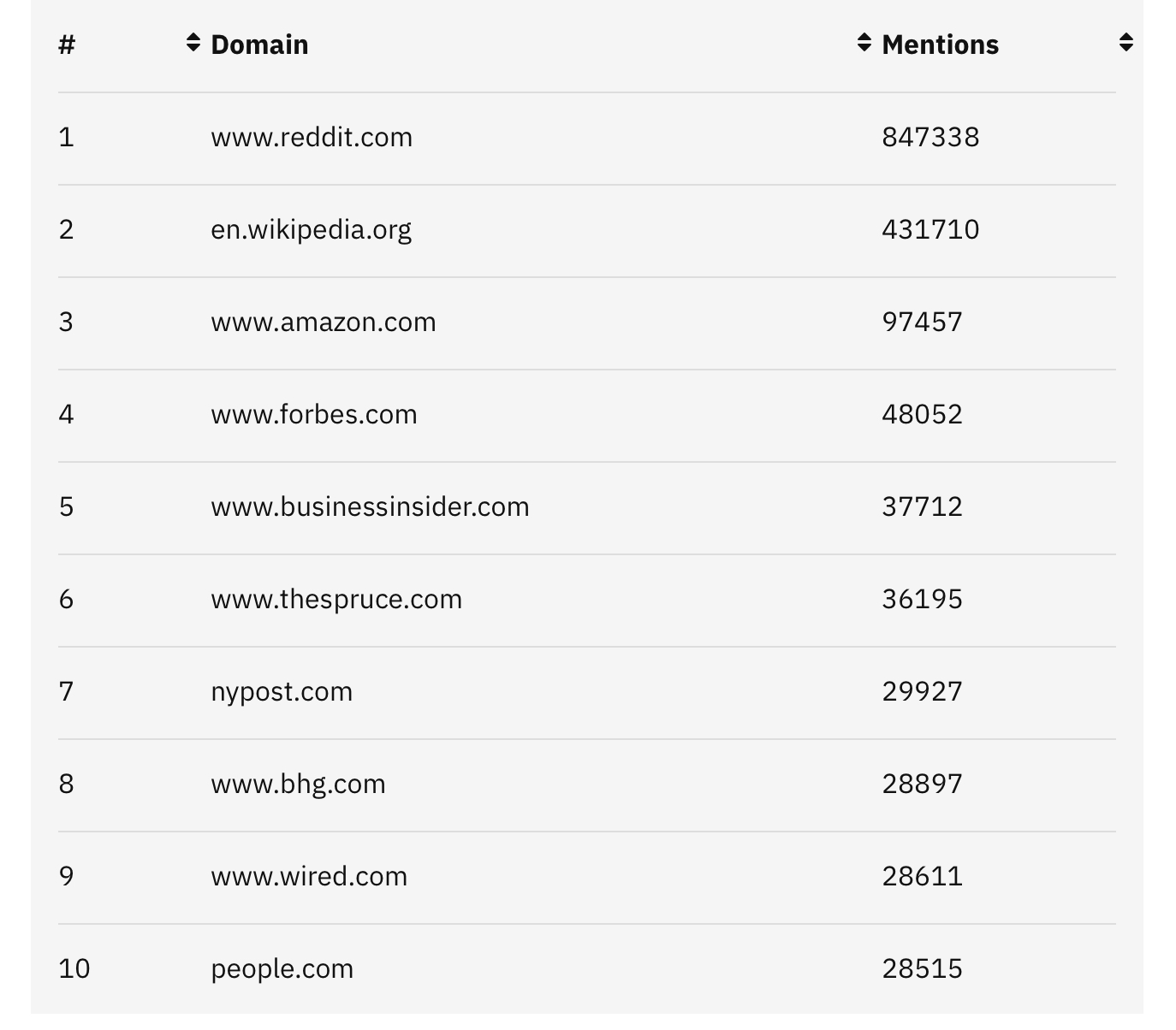
As a global model, ChatGPT draws information from geolocated sources appropriate to each country. In some cases, certain sources are likely to be preferred depending on the region or local market targeted by the query.
For example, ChatGPT’s results may vary if a user is located in the United States or Spain, due to source geolocation and their relevance in each country.
Examples of sources by country:
- In the U.S., sites such as Wikipedia, The New York Times and Forbes are commonly cited.
- In Spain, in addition to the local Wikipedia or Reddit, El País, ABC and La Vanguardia tend to be more relevant.
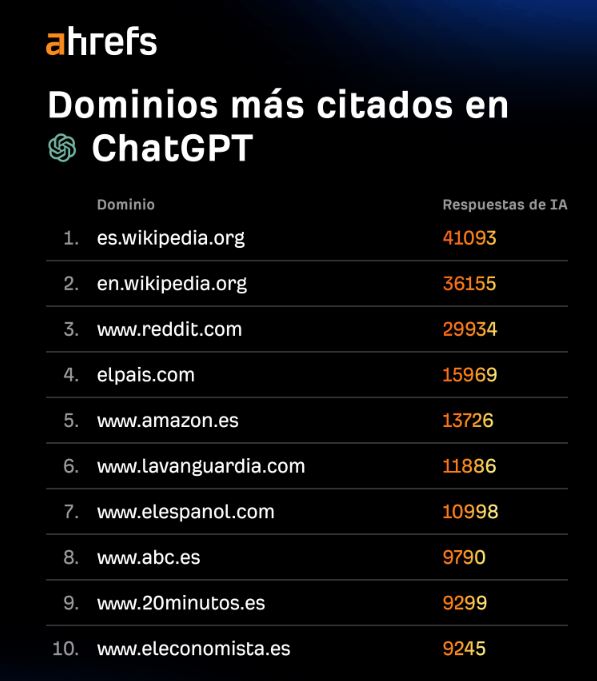
It is important to ensure that your content is localized and optimized for the target country, so that your page can be considered by ChatGPT among the most reliable and relevant sources for that market. These are principles of international SEO that you must also take into account in this context: ChatGPT is ultimately a global tool that often delivers local answers.
3.3. ChatGPT’s preferred sources by topic
In addition to geolocation, ChatGPT also has preferred sources depending on the topic of the query. For example:
- Technology media: ChatGPT tends to prioritize sources such as Xataka, TechCrunch, Wired or Ars Technica when it comes to technology or innovation topics.
- Health and medicine: Sources such as WebMD, PubMed, Mayo Clinic or peer-reviewed medical articles are frequently cited for health-related topics.
- Economy and finance: In this case, El Economista, Bloomberg, The Wall Street Journal and Financial Times are commonly cited.
3.4. Sources and citations used by ChatGPT for specific prompts
Beyond identifying the most commonly used or cited media by country and sector, what truly matters is knowing who appears in the most relevant answers for your business. We all want to be on Wikipedia or in La Vanguardia, but what really matters is appearing when users search for our product or service.
To achieve this, you will need tools, and they are not cheap. With tools such as LLMPULSE, you can provide the prompts you want to track and obtain the most frequently used sources by ChatGPT. From there, your mission is to outperform them with better content. And if you can’t beat your enemy, join them (no further hints).
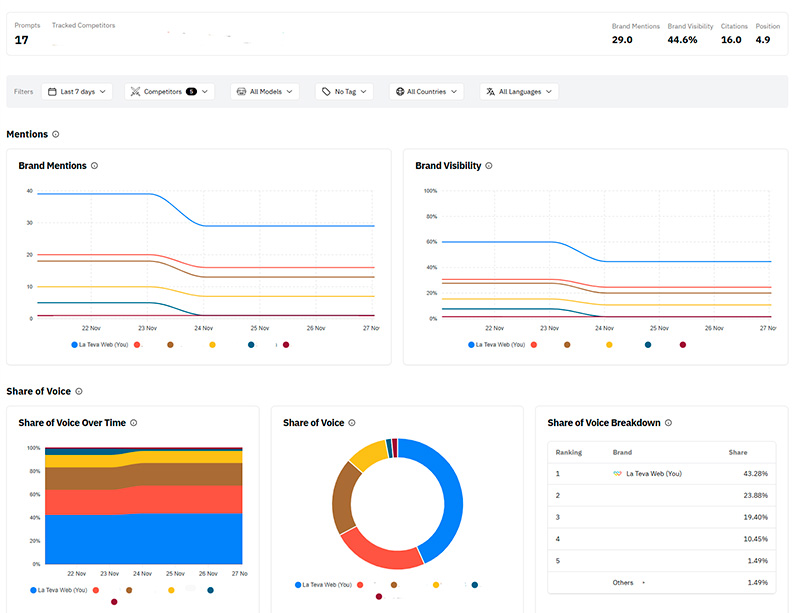
We have a dedicated post on “How to measure your brand presence in AI” on our blog.
3.5. Social media
Social media plays a crucial role in your content’s visibility within platforms such as ChatGPT. While ChatGPT does not directly index social networks, engagement signals from platforms such as Twitter, Instagram, LinkedIn and Facebook can influence the relevance of your content and, consequently, your brand.
Interactions and mentions on these platforms indirectly connect with your visibility in search engines and therefore in ChatGPT responses. Additionally, active and well-managed profiles may be considered by AI algorithms as authoritative sources in their field. For this reason, it is important to maintain a regular publishing rhythm with links to your website, encourage constant interaction (replying to comments, participating in discussions), and use relevant hashtags to help categorize your content.
3.6. Directories
Online directories are a fundamental reference source for your website, especially to improve local SEO and visibility on platforms such as Google or Bing. You will notice that relevant directories such as Yelp, Yellow Pages or Kompass contribute to your site’s authority and it is no coincidence that they are often cited by ChatGPT.
Additionally, many specialized directories in specific areas (such as health, education, technology, etc.) align with the accurate and verifiable information that ChatGPT values when generating more sector-specific answers.
3.7. Media
As mentioned, high-authority media outlets in Spain and globally (such as El País, ABC, El Mundo) are key sources for ChatGPT, especially for current affairs, culture, politics and economics.
Furthermore, many of these media organizations have collaboration agreements with OpenAI to make their content more accessible for AI-generated responses. Ensure that your content can be referenced by high-quality media, and consider collaborating with them or sharing content aligned with frequent searches in your industry.
These large outlets are not always within everyone’s reach, and sometimes creativity is required with the media currently available to you. A more affordable option that can still have a significant impact is issuing press releases, which may be published across various types of media.
3.8. Local SEO platforms (Google, Bing...)
Optimization on local SEO platforms such as Google My Business and Bing Places is essential to increase your visibility both on Google and on ChatGPT. Although these tools were not specifically designed or optimized for this purpose, many users search for local providers through chat and the results returned are often map-based. These systems are deeply integrated with search engines and the way AI models extract and display local information. Accurate and verified information on local SEO platforms ensures that your content is selected by ChatGPT when users search for local or specific services. You must go beyond the leading platforms; there are secondary ones frequently mentioned by ChatGPT, such as Foursquare.

3.9. Review platforms
Review platforms such as Trustpilot, Yelp, Google Reviews, Trusted Shops, Trustindex and Capterra have a significant impact on your brand’s credibility. User opinions play a key role in the authenticity that ChatGPT looks for when selecting sources.
Although not all AI systems directly access reviews, high-quality review signals reinforce your website’s authority and reviews and ratings are often cited in responses when users ask about the best providers or solutions in a given field. This can improve your positioning in AI-generated results and increase the probability of being cited in responses. Your task here is to identify on which platforms you have or can obtain reviews, design an action plan to acquire more and better ones, and promote those ratings as widely as possible on your website, social media and other available channels.
3.10. Certifications, guilds, associations and awards
Official certifications, memberships in guilds and associations, and awards received are clear signals of authority and trust for ChatGPT. These types of trust badges significantly influence the selection of quality sources for generating responses.
Being present in guilds or associations not only validates your expertise in a specific field, but also acts as a credibility factor that may be referenced by ChatGPT. Observe what your competitors are doing and start by evaluating whether you qualify for quality certifications (ISO, EFQM, etc.). Consider joining local or international trade associations or chambers of commerce that can provide visibility and support. Or why not apply for industry awards that validate your expertise — often won by default due to lack of participation from top competitors.
And if you’ve read this far, you already know what I’m going to say: it’s not just about obtaining those memberships or awards, the most important thing is to properly communicate those achievements — on your website, on your social media, through press releases, or even by organizing an event to celebrate them.
3.11. Being present and leading in rankings: Rank Building.
When ChatGPT answers questions such as “what are the best X,” it often cites lists and rankings published on websites, media outlets and blogs. To influence these responses, it is essential to position yourself within these rankings, either by collaborating with media or by creating your own rankings on your website. I invite you to read more about Rank Building and how to improve your positioning in this article on Rank Building.
Frequently asked questions about SEO for ChatGPT
- What is SEO for ChatGPT and why is it important?
SEO for ChatGPT is a strategy designed to improve your content’s visibility in responses generated by generative language models such as ChatGPT. While it is not about generating direct traffic, optimization focuses on being cited as a reliable source by AI, which can generate qualified leads and improve brand perception. - How does ChatGPT process queries and generate responses?
ChatGPT processes queries through a language model based on deep neural networks, converting text into numerical vectors to analyze and generate coherent responses. It uses techniques such as “attention” to select relevant parts of the query and build contextualized answers. - What factors determine whether my content will be cited by ChatGPT?
Factors such as content quality and clarity, source authority, accessibility and proper indexing, and source transparency play a crucial role. Well-structured content with clear headings and subheadings has a higher probability of being selected. - How can I optimize my website to be cited by ChatGPT?
Ensure your website is technically optimized (speed, security, structure). Use structured data such as Schema.org to facilitate AI engine access and processing. Minimizing JavaScript usage and ensuring crawler accessibility are also essential. - What is the llms.txt file and how can it help me?
The llms.txt file is an emerging practice that allows website owners to specify which content may be accessible to AI crawlers such as ChatGPT. Although it is not a universal standard, its implementation may provide greater control over which parts of your content are used in AI-generated responses. - Why are source authority and relevance important for ChatGPT?
ChatGPT prioritizes authoritative sources within their field and with temporal relevance. Pages with quality backlinks, presence in relevant media, or social mentions are more likely to be cited. It is important that your content is supported by authority signals such as backlinks and reliable external references. - How can I optimize my content for fast and accurate responses from ChatGPT?
To increase your chances of being cited, organize your content using hierarchical headings (H1, H2, H3), lists and FAQs. These practices help AI extract relevant text fragments more effectively and present clear answers. - What is conversational SEO and how does it help optimize for ChatGPT?
Conversational SEO focuses on creating content that directly and naturally answers common questions. ChatGPT responds better to content optimized in this format, so using conversational language and structuring articles as questions and answers improves the probability of being cited. - How does multimedia content influence ChatGPT responses?
Multimedia content, such as images, videos and infographics, can enrich user experience, but it must be properly optimized for AI. Ensure images include alt text, videos are accessible and infographics are well structured to facilitate inclusion in ChatGPT-generated responses. - How does media presence influence my visibility in ChatGPT?
Presence in high-authority media outlets can significantly improve your visibility in ChatGPT. When your content is cited by trusted and established sources, you increase the probability of being considered by AI. Maintaining a public relations strategy that includes press mentions and media collaborations strengthens your digital presence and improves the likelihood of being cited.
Interesting articles and resources
- Microsoft: “Optimizing Your Content for Inclusion in AI Search Answers”
- SEO.com: “How to Appear in ChatGPT Answers: A Guide for Businesses”
- Lisa Bean: “HOW TO SHOW UP IN CHATGPT: 4 SMART WAYS TO GET FOUND IN AI SEARCH”
- Travis Nicholson: “LLM SEO: How To Show Up in ChatGPT and AI Search Results”
- Wix: “What marketers should know about LLMs.txt”
- OpenAI: “Shopping with ChatGPT Search”
- Ahrefs: The 100 most cited domains in ChatGPT
About the author
Bruno Díaz — Marketing Manager
Professional with a long career as a communication and digital marketing consultant, specializing in SEO, SEM and web projects. As Marketing Manager of the agency, I coordinate a great team of digital marketing technicians of which I am very proud.
Related news


Hello! drop us a line
The goal of optimizing your presence on platforms like ChatGPT is not to attract direct traffic, but to be cited as a reliable source in AI-generated responses.